
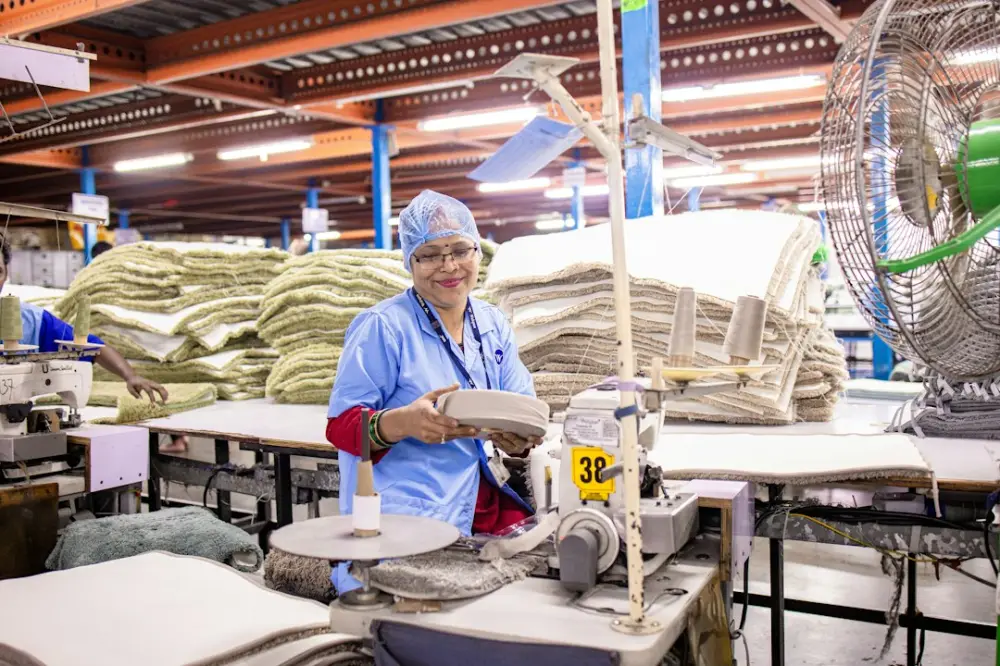
Responsible sourcing is the ethical procurement of materials, ensuring they are produced under fair labor conditions and minimal environmental impact. In 2026, this integrates with material lifecycle management—a framework that tracks a resource from extraction through production to end-of-life disposal or recycling, prioritizing sustainability and resource efficiency at every stage.
For distributors and manufacturers, this shift moves beyond simple price-per-unit metrics. It involves auditing the energy used during the centrifugation of liquid latex, the chemical footprint of vulcanization accelerators, and the logistics of reclamation programs. Practical sourcing today focuses on reducing supply chain volatility while meeting increasingly strict carbon-neutral targets in the polymer sector.
In the context of latex production, responsible sourcing begins at the plantation or the petrochemical plant. For natural rubber latex (NRL), this means verifying that the Hevea brasiliensis trees are grown without contributing to deforestation. A concrete example is the use of Forest Stewardship Council (FSC) certified plantations in Southeast Asia, where land use is monitored via satellite imagery to ensure biodiversity is preserved while providing fair wages to smallholder farmers. On the synthetic side, responsible sourcing involves selecting monomers derived from bio-based feedstocks or recycled plastics rather than virgin crude oil.
Material lifecycle management then takes these responsibly sourced inputs and maps their journey. It asks how a nitrile glove or a latex foam mattress can be repurposed or safely degraded once its primary use ends. By viewing materials as temporary states of a resource rather than disposable commodities, manufacturers can identify where waste occurs—such as in the leaching tanks or during the trimming of molded parts—and implement recovery systems to capture and reuse excess polymer solids.
Why Sustainable Procurement Matters in 2026
The transition toward sustainable procurement is no longer a voluntary "green" initiative; it is a core operational requirement for maintaining market access. In 2026, regulatory frameworks like the EU Deforestation Regulation (EUDR) and various global carbon border adjustment mechanisms have made transparency mandatory. Buyers must prove the origin of their polymers to avoid heavy fines or shipment rejections at international borders.
Beyond compliance, sustainable procurement builds resilience against price shocks. When a manufacturer invests in sustainable manufacturing in 2025: what buyers already realized was a shift toward localized supply chains, they reduce their exposure to global shipping disruptions. For example, a manufacturer producing high-performance latex adhesives might source bio-tackifiers from regional agricultural waste rather than relying on imported synthetic resins. This not only lowers the carbon footprint of the final product but also stabilizes the bill of materials against fluctuating oil prices.
Consumer and industrial end-users are also driving this change. Tier-1 automotive suppliers, for instance, now require detailed Environmental Product Declarations (EPDs) for every polymer component, from weatherstripping to engine mounts. If a latex supplier cannot provide data on the kilowatt-hours consumed per metric ton of dry rubber content, they risk being delisted in favor of more transparent partners. This demand for data has turned the supply chain into a value chain where information is as critical as the physical material itself.
Managing the Circular Material Lifecycle
Managing a circular lifecycle requires a granular understanding of how polymers behave from the mixing vat to the landfill. The goal is to close the loop, ensuring that the energy and carbon embedded in a product are not lost. This process is divided into several critical phases: extraction, processing, manufacturing, distribution, and end-of-life management.
During the manufacturing phase, efficiency is the primary driver of circularity. A practical example is the implementation of closed-loop water filtration systems in dipping lines. In the production of latex balloons or medical tubing, significant amounts of water are used for leaching out proteins and residual chemicals. By treating and recirculating this water, plants reduce their environmental draw and often recover valuable polymer particles that would otherwise be flushed as sludge. When you choose the right manufacturing partner for these technical components, evaluating their waste-recovery infrastructure is as important as checking their quality control lab.
The end-of-life phase remains the most challenging aspect of the polymer lifecycle. In 2026, we see a rise in "take-back" programs for industrial latex products. For example, used conveyor belts or heavy-duty rubber mats are being collected, cryogenically ground into "crumb rubber," and then reintegrated into new rubber compounds as a secondary raw material. This reduces the need for virgin latex and prevents bulky polymer waste from occupying space in industrial landfills. Understanding the chemical compatibility of these recycled fillers is essential for maintaining the tensile strength and elasticity required for high-performance applications.
Overcoming Implementation and Sourcing Challenges
Transitioning to a fully responsible sourcing model is not without friction. The primary hurdle is often the "Green Premium"—the higher initial cost of certified sustainable materials compared to conventional alternatives. Small and medium-sized manufacturers may find it difficult to absorb these costs without passing them on to price-sensitive distributors. However, the long-term cost of inaction, including potential carbon taxes and loss of contracts, usually outweighs these initial expenditures.
Data fragmentation is another significant obstacle. A single batch of synthetic latex might involve chemical precursors from three different continents, each with varying levels of environmental reporting. To solve this, many in the industry are adopting Digital Product Passports (DPPs). These are digital records, often managed via decentralized ledgers or specialized ERP modules, that store a material's entire history. For a distributor, a DPP allows them to scan a QR code on a drum of latex and instantly see its carbon footprint, chemical safety data, and the percentage of recycled content it contains.
There is also the technical challenge of material performance. Substituting a traditional petroleum-based plasticizer with a bio-based vegetable oil derivative can alter the curing profile or the aging characteristics of the rubber. Overcoming this requires rigorous R&D and pilot testing. A scenario-based solution involves incremental substitution: replacing 10% of a synthetic polymer with a bio-equivalent and monitoring performance over a six-month period before scaling up. This measured approach allows manufacturers to maintain quality standards while slowly decarbonizing their product lines.
Future-Proofing Your Manufacturing Processes
Future-proofing in 2026 means anticipating the next wave of material innovations and regulatory shifts. The industry is moving toward "designer polymers" that are engineered for easier recycling. This includes the development of vitrimers—a class of polymers that behave like thermosets (durable and heat-resistant) but can be reshaped and recycled like thermoplastics when specific catalysts are applied. For the latex industry, this could revolutionize how molded rubber goods are repaired and reused.
Energy transition is the other half of the future-proofing equation. Responsible sourcing must extend to the energy used in the factory. Manufacturing facilities are increasingly installing on-site solar arrays or entering into Power Purchase Agreements (PPAs) for wind energy to power their vulcanization ovens and centrifuges. By decoupling production from the fossil fuel grid, manufacturers protect themselves from energy price volatility and significantly lower the "cradle-to-gate" carbon footprint of their materials.
For buyers and distributors, the takeaway is clear: the value of a material is increasingly tied to its history and its future, not just its current physical properties. Prioritizing partners who invest in transparency, circularity, and ethical labor isn't just a moral choice; it is a strategy for long-term survival in an increasingly regulated global market. At HindLatex, we focus on these intersections of sustainability and innovation, providing technical insights into modern latex and polymer manufacturing. By staying grounded in practical applications and responsible procurement, we help the industry move toward a more efficient and resilient material lifecycle.
For more information on sustainable practices, you can visit the ISO 20400 standards for sustainable procurement or research the latest circular economy frameworks on Wikipedia.